1. You don’t have to be born with it to do it
The notion that geniuses such as Shakespeare, Picasso and Mozart were `gifted' is a myth! According to a recent study at Exeter University, excellence in any field, this includes design, is determined by five key elements: opportunities, encouragement, training, motivation and - most importantly - practice. The research shows that everyone has creative abilities that grow with the amount of effort we put in. This explains the fact that I am being relatively successful on the course without being exceptionally skilled or talented in graphic design.
2. Feed your brain
In order to produce creative output you need to consume creative input. Your brain as is an amazing processing machine, not a magic hat. You need fuel to power it. Read books and magazines; visit industry websites and blogs; go to galleries and exhibitions. It is important, however, to not only see things but to actively question them. When you see something you like, ask yourself why you like it? What is unique about it? Why the idea works well? Be analytic and learn from it, maybe even write about it, articulate it. Processing ideas helps generate new ideas. And in this business…
3. Quantity equals quality
The longer the list of ideas, the higher the quality of the final solution. Don’t storm the exit door with your first idea. Get used to changing directions, angles and point of view. Often, the highest quality ideas appear at the end of the list. When I started this course I thought it’s best to quickly choose an idea and then work longer on polishing the final product. Now, I think it is better to take the time to consider alternatives – as many as possible. When you get the idea right, everything else will follow.
4. It’s good to be childish
The average adult thinks of three to six alternatives for any given situation. The average child thinks of 60. Seeing the problem, adults panic, feel insecure and uncomfortable, push for quick solutions. Children see a problem as an adventure and a challenge. They don’t look for ready-made solutions in books or on the Internet, but use their own imagination to invent new ones. And they play along the way. Childlike attitude helps designers have fun with their projects and deliver creative and original solutions.
5. Map your ideas
Whether you are working on a year-long project, researching the topic for your blog post or discussing something with a client, mapping is the best way to organize your thoughts. Mind mapping mimics the way we think more accurately than vertical (linear) lists. Neurons in your brain are not linear but have ‘branches’ (dendrites) that transmit impulses to many other cells simultaneously. Drawing mind maps will help understand complex problems, see patterns and make connections.
6. Don’t be afraid of doing things differently
Designers need to think like inventors. Nobody can come up with something new by doing the same think time and time again. Innovation might be an industry buzzword but you won’t get anything truly innovative if you don’t leave your comfort zone. Doing what you already can is your limitation. Start by imagining things even if you don’t know that they are possible to achieve. Don’t be afraid to experiment and to be truly different. Don’t follow the trends and fashions - make them! Don’t just meet the expectations – exceed them!
7. Creativity is an individual process
As designers we can’t work on any project in isolation. We need to cooperate with colleagues, clients and audiences to develop an inclusive considerate solution. Taking into account other people’s points of view is extremely valuable. But, at its core, creativity is an individual process. Personally, I am not most efficient while working in a group – it distracts me. I am much more creative when I am alone and can concentrate. Groups are best for idea selection or evaluation rather than idea generation.
8. Both sleep and creative insomnia are essential
Just a few months ago, I had a tendency to leave a lot of work till the last minute. I would spend the last few days and nights working on a project without a break to finish it before the deadline. At one point, however, I realized that some ideas need to mature for longer; sometimes I need to “sleep with them”. Moreover, most of my good ideas come to me at night when I am trying to fall asleep. In fact, a number of studies on sleep and creativity have shown that sleep can facilitate insightful behavior and flexible reasoning so it is important to get enough rest. Good ideas and creativity usually do not appear under stress but when you are relaxed and rejuvenated.
However, I also came across a theory of creative insomnia, in which creativity is significantly correlated with sleep disturbance. I experience it a lot when my mind refuses to drift off and keeps sending me some new ideas instead. Usually, these are good ideas so I’ve learnt to write them down and put to work the following day.
9. Nature has solutions for every human problem
Whatever design challenge you might be facing now, it has almost certainly been already solved by nature. With its 3.8 billion years of experience Mother Nature provides inspiration for sustainable design today. Biomimicry has led to development of self-cleaning paint by imitating the rough surface of Lotus and to increasing the efficiency of wind turbines by imitating the bumps on a humpback whale’s flippers. I have learnt to search for such simple and clever ideas in the natural environment I love.
10. Make ethical choices
The issues or personal and corporate ethics echoed across all the subjects discussed this semester: typography, wayfinding, animated digital media, packaging and advertising. I have realized that no matter what field of design you are working in, there is always something you can do to make our world a better place. It might be minimizing energy use in your studio, recycling paper waste, or campaigning for a social or environmental cause of your choice. It may involve choosing clients with a good Corporate Social Responsibility, or making sure your printers are also eco-friendly. Take a personal responsibility for the effect of your work. Whatever you do, there is always a way to do it better,¬ and to inspire other people to jo
Wednesday, 14 April 2010
TASK 8.2: Ten Things I've Learnt
Posted by
Katarzyna Matuszewska
20:51
Tuesday, 13 April 2010
TASK 8.1: Greener Than Green Design
Posted by
Katarzyna Matuszewska
08:53
What is Sustainable Design?
Traditionally, a term 'sustainable design' was used as a synonym of 'green design', 'eco-design' or 'design for environment'. Now, it has a new, broader meaning. Sustainable design aims to deliver profits on the 'tripple bottom line'. It still generates financial profit, but also benefits the environment and the society.

While discussing the issue, it is extremely important to understand that sustainable design does not apply to designing products in separation from the environment they are being used in. Sustainable design refers to designing entirely sustainable systems: a product, the way it is produced and used, and what happens to it afterwards.
Briefly, sustainable design may be defined as the design of flexible systems that can be sustained indefinitely. Sustainable product design, on the other hand, is the design of products that aid or permit sustainability of the systems in which they operate.
These definitions can be simplified further to say that "sustainable design is good design", or even better, "good design is sustainable design".
The basics of the sustainable design are very well explained by Tom Greenwood in the video I found on the ESP Design website. To illustrate the concept, Greenwood is using three examples:
- ebay (an online marketplace for second hand goods);
- Onzo (home energy use monitoring system);
- Freitag (fashionable bags made out of used truck tarpaulins, car seat belts, airbags and bicycle inner tubes).
Inspired by Nature
Personally, I am very much in favour of sustainable design. But what I find even more inspiring is 'biomimicry' (or 'biomimetics') - an emerging discipline that studies nature's best ideas and then imitates these designs and processes to solve human problems.
Biomimicry promotes the study and imitation of nature’s remarkably efficient designs. I was amazed to realize what nature has to offer: 3.8 billion years of field research, testing and prototyping as well as a successful adaptation of nature's designs in 10-30 million species living on Earth now. In my eyes, this is truly green and sustainable design!
There are a number of organizations that advocate the nature's inspiring solutions. Biomimicry Institute promotes learning from and then emulating natural forms, processes, and ecosystems to create more sustainable and healthier human technologies and designs. It brings together scientists, engineers, architects and innovators to create natural and eco-friendly technologies fit for the future.
The Biomimicry Guild is the only innovation company in the world to use a deep knowledge of biological adaptations to help designers, engineers, architects, and business leaders solve design and engineering challenges sustainably.
Ask Nature is an online inspiration source for the biomimicry community. In here, I have learned that butterflies exhibit vibrant colors and stay clean using nano-scale structures on their wings. Designers and engineers have emulated this strategy to create self-cleaning coatings, fabrics and paints, and electronic display screens.
- self-assembly,
- CO2 as a feedstock,
- solar transformations,
- the power of shape,
- quenching thirst,
- metals without mining,
- green chemistry,
- timed degradation,
- resilience and healing,
- sensing and responding,
- growing fertility,
- creating conditions conductive to life.
I found the above examples of biomimetic design extremely inspiring. I believe that this is the answer to most of our environmental and human problems. And beneath the advanced science and engineering, there is a very simple principle. Humans might be the dominant species on Earth now, but human history is very short as compared to the history of the planet. As seen on The 11th Hour, the planet is not in danger, neither is the life on the planet. But human existence on it is threatened because we see ourselves somehow in separation from the rest of the ecosystem. We need to develop sustainable ways of inhabiting the planet in order to provide a safe environment to live in for the future generations. And, in my opinion, it is best to use the 3.8 billion years of experience nature has to offer. I strongly believe that the only way to sustainability is to learn directly from nature and as designers we have the responsibility to do so.
Monday, 12 April 2010
TASK 7: Socio-Commercial Advertising
Posted by
Katarzyna Matuszewska
17:17
Advertising in a Pill
A Canadian humorist, Stephen Leacock, once said that advertising is “the science of arresting the human intelligence long enough to get money from it.” The statement was true in Leacock’s lifetime (1869-1944) and it is true today.
Traditionally, advertising is defined as a form of communication intended to persuade an audience (viewers, readers or listeners) to take some action, such as purchase or consume a particular brand. It includes the name of a product or service and usually shows how that product or service could benefit the consumer. Through the repetition of an image or product name, advertising campaigns associate related qualities with the brand in the minds of consumers.
Although advertising is most often used to sell commercial products and services, some non-for-profit organizations (political parties, interest groups, religious organizations and charities) use this method of communication to inform, raise awareness and funds for a particular cause. Commercial and non-commercial ads are usually but not always (as I we will see later) easy to distinct from each other. Nowadays, both types utilize traditional media (newspapers, magazines, television, radio, outdoor or direct mail) and new media (websites and text messages).
Advertising's Got Some Issues
Regardless of the means of communicating, advertising has always been a controversial subject. Since its very purpose is to persuade customers to act in certain way, advertising is often accused (not without a reason) of manipulating or even ‘brainwashing’ people.
There is a number of ethical issues surrounding the field of advertising and these include:
- The use of sex and/or violence in advertising campaigns;
- The right to advertise products considered to be harmful to humans, such as alcohol and cigarettes or unhealthy foods;
- Advertising aimed at children and other vulnerable social groups;
- False claims, lies and misleading the consumers (especially evident in recent trend to show brands as ‘green’ and ‘eco-friendly’ in order to win the environmentally conscious customers);
- The use of shock tactics crossing the boundaries of taste and decency (frequently utilized in charity fundraising campaigns);
- The cultural and moral impact of advertising on customers and customs as well as the overall spread of consumerism.
Personally, I do understand the need to have some control over what can and cannot be used in advertising. However, I always find it interesting that people who raise accusations against advertisers are not usually concerned about themselves but about ‘someone else’: children, teenagers, young adults, working class people, elderly, the ill, the troubled, the stupid ones, etc. I do acknowledge the fact that we all, at times, become ‘victims’ of manipulative advertising. But I also believe that the fears of the entire, ‘brainwashed’ human civilization heading for the inevitable self-destruction are a bit exaggerated and those who spread such panic simply underestimate customers’ intelligence. People are not dumb! We know advertisers are biased! We know they are just trying to sell us something! We no longer take adverts seriously! We really can negotiate advertising or ignore it completely.
With this in mind I begun questioning what ‘ethical advertising’ really is. Does a commercial become ethical by simply obeying the laws and respecting the rules of social and cultural decency? Is a charity ad an ethical ad only because it supports a good cause? How do we distinguish good advertising from bad advertising? What makes a ‘good’ advertising campaign: a stunning graphic design, a commercial success it generates, or the charitable cause it advocates? And finally, is it possible to generate a profit while promoting an important social issue through a stunning graphic design? Can we have it all?
My answer is ‘Yes’! And it is not a totally new concept!
Advertising for Social Responsibility
While in 1980s the West was dealing with the issues of race, racial equality, inequality and diversity, United Colors of Benetton launched the first of many controversial advertising campaign featuring multi-racial couples and families. Instead of showing multi-coloured clothing and telling us where to buy it, Benetton ads represented important social issues, religious and political conflicts (the Palestinian and the Israeli), religious and sexual conflict (a priest kissing a nun) and yet another portrayal of moral conflict (the stereotypes of good and ever, symbolized by an angel and the devil). Paradoxically, the growing popularity of Benetton merchandise translated into the disappearance of those good from the ads.
In early 1990s Benetton’s advertising style became even more ‘realistic’ through the use of photojournalistic imagery instead of staged photography and manufactured reality used in traditional ads. Again, instead of pictures of happy people in colourful clothing, customers had to face terrifyingly real images of war cemetery, a newborn baby, a man dying from AIDS, a soldier gripping a human thigh bone, a ship being stormed by emigrants, etc.
The reactions to those real-life photos were sometimes violent. The campaigns were criticized not only for using shocking images and violating taboos but also for using AIDS, war, racism and so forth, as a source of income and a component of a profit-making venture. Nevertheless, Benetton’s campaigns stimulated public discussion of those important issues more than efforts of many purposely-established non-for-profit organizations. United Colors of Benetton proved that a ‘different’ use of advertising was indeed possible.
Designers Vs. Advertisers
The Benetton example serves also as a valuable contribution to the discussion of the graphic designers’ role in advertising. Back in 1964 Ken Garland questioned the application of graphic designers’ talent and skills to advertising. In his famous manifesto First Things First Garland argued that advertising had “reached a saturation point” (questionable from our perspective) and that it had been persistently presented as “most lucrative, effective and desirable means” of using graphic designers’ potential.
As the advertising field grew, it became more and more difficult to differentiate between graphic designers and advertisers. More than ever before, graphic design is now being used as a tool for advertising.
Garland’s call for “reversal of priorities in favour of the more useful and more lasting forms of communication’ was updated and reprinted by the Canadian magazine Adbusters in 2000. Many of the most influential contemporary graphic designers, art directors and visual communicators became uncomfortable with “devoting their efforts primarily to advertising, marketing and brand development”. They spoke against serving commerce and in favour of applying the problem-solving skills to unprecedented environmental, social and cultural issues demanding designers’ attention, expertise and help.
With the First Things First manifesto in mind, Benetton’s past and present marketing campaigns seem even more admirable and significant. The brands’ socio-commercial work of the past two decades strikes as a perfect example of a rare marriage of advertising and social responsibility. My point is that United Color of Benetton proved time and time again that combining aesthetics, social impact and commercial success is indeed possible. And this is what I call ‘good advertising’!
Wednesday, 31 March 2010
TASK 6: Packaging Design Unwrapped
Posted by
Katarzyna Matuszewska
06:10
Role of Packaging
Packaging is the science, art and technology of protecting products for distribution, storage, sale, and use. Packaging also refers to the process of design, evaluation, and production of packages.
Packaging design has traditionally been viewed as a means of protecting the contents of the package. However, for several decades packaging has been increasingly utilized as a sales canvas on which the product’s attributes and benefits are promoted. Subsequently, packaging design is a contributor to the cost of the end product as well as a part of the product experience itself.
Nowadays, packaging and package labeling have several objectives:
- Physical protection of the product from shock, vibration, compression, temperature, etc.
- Barrier protection from oxygen, water vapor, dust, etc. most often utilized in food packaging in order to keep the contents clean, fresh and sterile for longer, and to extend the product’s shelf life.
- Containment or agglomeration of small objects (or substances, such as liquids, powders and granular materials) in one package in order to increase handling efficiency.
- Information transmission - Packages and labels communicate how to use, transport, recycle, or dispose of the package or product.
- Reducing security risks of shipment through tamper-evident features, authentication seals, security printing, anti-theft devices, etc.
- Convenience - Packages can have features that add convenience in distribution, handling, stacking, display, sale, opening, reclosing, use, dispensing, and reuse.
- Portion control achieved with single-serving or single dosage packaging not only reinforces the precise amount of contents to control usage, but also aids the control of inventory.
- Marketing - encouraging potential buyers to purchase the product by applying marketing communications and graphic design to the surface of the package.
Trends in packaging design
One of the most evident movements in packaging design is a shift from aesthetics to ethics. In the 80s and 90s packaging designers were mostly concerned with improving aesthetic appeal and sales of the product. They used foil bags, embossed and etched bottles, textured papers, latest print techniques and new materials to enhance product perception and standout.
More recently, packaging designers turned towards minimalism. Product packaging tends to be simpler and smaller, yet very functional. A growing awareness of the impact of excessive packaging on the environment has driven both designers and consumers towards green packaging.
Sustainable packaging refers to more than just recycling. It is considered with issues such as a carbon footprint (the amount of greenhouse gases emitted during the production process, transportation from the source to the points of production, sale and consumption). Packaging designers need to consider the palette maximization in order to minimize the amount of air that is shipped during transportation and, consequently, the number of shipments required and the greenhouse gases emission.
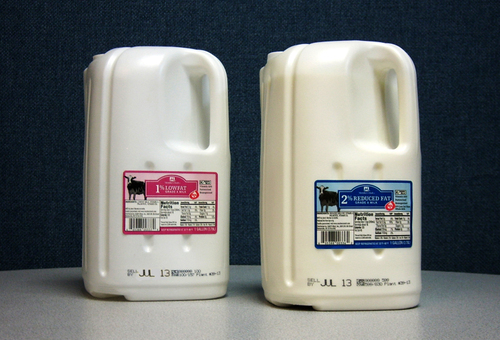
A good example of such considerations in use is Walmart’s redesigned milk container, which reduced shipping labor by 50 percent and water usage by 60 to 70 percent. The new packaging enables Walmart to stock 224 containers in a space that used to hold 80.
Another important issue is a life cycle of materials used for packaging. Designers need to consider whether packaging materials come from recycled or sustainable sources and what happens to them after they are used.
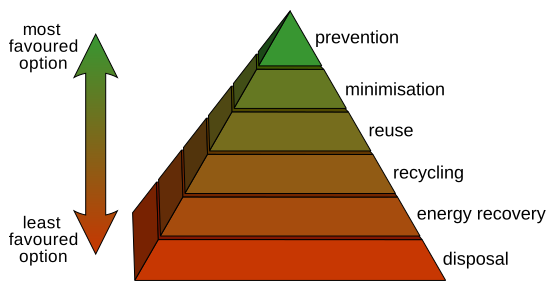
The sustainability of the product package can be assessed using the waste hierarchy, which refers to the 3Rs of reduce, reuse and recycle. Topping the hierarchy, prevention of waste is the most favoured option. Packaging should only be used when necessary. Ironically, however, avoiding all packaging may actually increase the amount of waste generated. If the product is damaged or degraded the energy lost is far greater than that of the package.
Therefore, minimization is the second option in waste management strategy. It refers to reducing the volume of packaging to the minimum necessary to perform the protective role of the package. Usually, “reduced” packaging also helps minimize costs.
A third option opened to packaging designers is design for reuse. It encourages reuse of the package by customers (for instance, by using the package for other purposes) and manufactures (reusing the packaging of the incoming parts for a product, either as packaging for the outgoing product or as part of the product itself).
Recycling is being placed further down the waste hierarchy. The reprocessing of materials into new products encourages the use of primary components such as steel, aluminum, paper or plastic, that are not difficult to separate and do not contaminate recycling operations.
The least favoured options are energy recovery (using the heat available from packaging components) and disposal (placement in a sanitary landfill).
Green is Good but... (it doesn't end there)
Having considered the environmental issues, a good packaging designers turns into graphic design and packaging aesthetics in order to attract consumers. It is important that a packaging stands out because, according to various reports, over 70% of purchase decisions are made at point of purchase and a pack on a supermarket shelf has less than three seconds to grab attention.
A product packaging needs to tell a story about the product, needs to communicate the key messages or attributes of the product and needs to convey the brand identity. Incorporating easily recognizable visual equities, such as a shape (e.g. the Perrier bottle), a colour (e.g. yellow for Kodak), an illustration (e.g. the Nike Swoosh) or a name (e.g. “I can’t believe it’s not butter”) can greatly aid the process.
It is true that he difference between a great pack and a disaster is all in the design. There are a number of websites you can visit to find excellent examples of great packaging design. These include:
- Design Council
- Design Notes
- Design Tutorials 4 U
- Webdesigner Depot
- Smashing Magazine
- Dzineblog
- DesignMag
- 2ExpertsDesign
- Koi Koi Koi Visual Arts Magazine
- The Dieline
- Ambalaj – sustainable packaging design
- Minervity - one of my favourites, showing examples of inspirational packaging design utilizing type.
Green Cup created by two young Swedish guys – Gustav Nisser Henrik Lindholm - is an alternative to disposable cups; a reusable mug that gets you discounts while at the same time reducing energy usage, wasted resources and littering. GreenCup creates a network of cafés that all offer the GreenCup mug for sale at a price substantially below market value, as well as a discount when people use their GreenCup mug to buy coffee. The consumer keeps enjoying great coffee at a reduced price and get to help save the environment at almost no effort. This is an excellent example of the 'reduce' and 'reuse' rules at work.
Banana leaves might be used as a new ecological material for take away packages. This deliciously refreshing concept puts many of the most "environmentally friendly" packages on today's market to shame. Banana leaves exist in many regions around the world and last long after they are cut off the trees (sustainably). Their wax-like surface is ideal for wet and greasy foods. They are flexible and, by using die cut technology, can be adapted to many types of packaging. No glue is used. The unique qualities of this material allow packages to be opened simply by tearing the banana leaf along its natural perforation.
Tuesday, 2 March 2010
TASK 5: Redesigning the World
Posted by
Katarzyna Matuszewska
14:03
Design for Social Impact
Design is often considered a powerful tool capable of changing the world for better. If the goal of a design process is to improve human well-being and livelihood, we are dealing with so-called 'social design'. There are many definitions of the term but within the design world social design is understood as the designers' responsibility to facilitate the betterment of the society and/or the environment through good design.
The idea of responsible design was popularized by Victor Papanek (1927-1999) known as "a philosopher of design" and one of the first advocates of socially and ecologically sensitive design of products, tools and community infrastructures. Papanek travelled around the world giving lectures about his ideas for ecologically sound design serving the poor, the disabled, the elderly and other minority segments of society. His philosophy became the foundation for other ethical movements in design such as human-centered design, universal/inclusive design and sustainable design.
Currently, there are a few organizations putting social design high on their agendas. These include:
- AIGA - professional association for design with a special interest in society and environment. AIGA's Center for Sustainable Design provides a wide range of information regarding sustainable business practice.
- The Designers Accord - Global coalition of designers, educators and business leaders working together to create positive environmental and social impact.
- SocialDesignSite - International platform on social design projects.
- Design Council UK - National strategic body for design.
- O2 Global Network - International network on sustainable design.
- Massive Change - explores the legacy and potential, the promise and power of design in improving the welfare of humanity. It originated as a collaboration between Bruce Mau Design and the Institute without Boundaries.
- WorldChanging - Online magazine that works from a simple premise: that the tools, models and ideas for building a better future lie all around us.
- DESIGN 21: Social Design Network - Online community that brings together socially conscious designers, non-profits, individuals and organizations to promote design for the greater good. It is co-founded by The United Nations Educational, Scientific and Cultural Organization.
- Social Designer - Online competition platform and marketplace for socially conscious goods.
- IDEO - Global Design consultancy that creates impact through design.
Since 1984 he worked to establish a code of ethics which embraces social responsibility for graphic designers throughout Canada. In 2000, Berman sold his design agency and rededicated his career to help spread the idea that visual communications can, and will, help repair the world. He authored Do Good Design (2009) in which he encourages designers not just to do 'good design' but to do 'good'.
He writes: "Designers have far more power than they realize: their creativity fuels the most efficient (and most destructive) tools of deception in human history. (...) The same design that fuels overconsumption also holds the power to help repair the world."
In his book, Berman encourage designers to take the "Do Good Pledge", which involves the commitment to stay true to the profession and oneself, and spending at least 10% of the professional time helping repair the world.
At first I was attracted to the idea and wanted to take the pledge myself. But after researching Berman's work deeper I got an impression, and it's my subjective opinion, that Berman persuade designers to scrap aesthetics altogether and devote their lives entirely to helping others. If you look at his website, you will notice that it's not fantastically designed. I found it surprising taking into consideration that Berman spent years in website design. Even his book, written by a graphic designer for other graphic designers, seems to be lacking the visual 'wow factor'. His graphics somehow fail to truly impress me.
In my opinion, designers can do more good if they combine their 'good intensions' with 'good designs'. I agree with Berman's claim that designers should be doing more 'good' for the world. But personally, I believe that they should also make sure that their 'good' looks good. Design in about inspiring people to act and visually persuading them to do so. And although I admire Berman's work ethics and philosophy, his graphics somehow failed to convince me.
Worldstudio
Worldstudio is a marketing and design firm which believes that corporations hold the power to make lasting social and environmental change. It works with organizations to connect their marketing goals with strategies for corporate social responsibility through marketing, communication and branding programs.In 1993 Worldstudio established Worldstudio Foundation as a vehicle for the company to give back to the creative community. One of the most important initiatives of the foundation is the Design Ignites Change project co-founded with Adobe Youth Voices. Design Ignites Change engages hight school and collage students in multidisciplinary design and architecture projects that address pressing social issues. In its annual contest, it rewards exeptional application of design thinking to solving problems in health, education, environment, communities, politics, business and humanity.
In 2006, Worldstudio got involved in The Urban Forest Project described as a series of unprecedented outdoor banner exhibitions taking root in cities around the world. In each location, artists, designers, students and the general public employ the idea a tree to make a powerful visual statement on banners that will be displayed throughout the community.
The tree is a metaphor for sustainability and, in that spirit, the banners at the close of each exhibition will be recycled into totebags and auctioned off to raise money for a local non-profit organization. Each local project will also incorporate or support an environmental call to action such as tree planting initiatives. The program can easily be adapted to address a number of green and creative initiatives in a variety of ways to shape a project that is unique and expressive of the local community.
I chose to discuss The Urban Forest Project because it perfectly illustrates the idea of design for social change. It addresses the environmental issues through the colaboration of many people. In my opinion the designers efforts to change the world must not be limited to digtal desktop design. The Urban Forest Project takes design for sustainability to the streets, gets the public not only influenced but also involved. As opposed to a one-off campaign, the project created a wider and more flexible system of eco-friendly design.


There are hundreds of banner designs I wanted to show here but I have to limit myself to a few. For more visit the following websites.
Times Square, New York
Baltimore
Denver
Albuquerque
Toledo
Monday, 1 March 2010
TASK 4: Resurrection of Corporate Ethics or Effective PR Buzzword?
Posted by
Katarzyna Matuszewska
19:40
CSR Decrypted
Corporate social responsibility (CSR), also known as corporate citizenship, responsible business, sustainable responsible business (SRB), or corporate social performance, is a form of corporate self-regulation integrated into a business model aiming to embrace responsibility for the impact of the company activities on the environment, consumers, employees, communities, stakeholders and all other members of the public sphere.
The term CSR came in to common use in the early 1970s and refers to the deliberate inclusion of public interest into corporate decision-making, and the honoring of a triple bottom line: People, Planet, Profit.
CSR demands that businesses manage the economic, social and environmental impacts of their operations to maximise the benefits and minimise the downsides. Key CSR issues include governance, environmental management, stakeholder engagement, labour standards, employee and community relations, social equity, responsible sourcing and human rights.
Beside “fulfilling a duty to society”, CSR brings a competitive advantage by improving access to capital, reducing risk, enhancing brand image, reducing costs and attracting, retaining and motivating employees.
So if CSR is so good why does it remain a controversial subject?
Criticisms and Concerns
Critics of CSR argue that corporations are only responsible to their shareholders and not to the entire society. They accept that businesses should obey the laws of the countries within which they work, but see any additional initiatives as threats to capitalism and free enterprise.
In many instances CSR programs undertaken by companies such as British American Tobacco, the petroleum giant BP and McDonalds, are believed to distract the public from ethical questions posed by their core operation. It seems that the goal of their CSR efforts are not to benefit the society but to maximize their commercial profit by raising the company’s reputation.
Some critics claim that CSR programs are easily misused. Some companies may accept self-regulatory policies to avoid more strict regulations imposed by law or various pressure groups (for example, workers unions). At times, simply obeying laws is being presented to the public as voluntary and dragged under the CSR umbrella.
As CSR became mainstream, most companies now incorporate their environmental and social policies into the wider PR and Marketing Strategies. Yet some companies seem to try harder than others. Every year Ethisphere magazine publishes the globally recognized World’s Most Ethical Companies Ranking to honour the best CSR efforts. Not surprisingly Starbucks, Nike and Marks & Spencer made it to the list. But among the 2009 winners are also: BMW, Toyota Motor, HSBC, T-Mobile and even McDonald’s! For the full ranking of awarded companies visit the Ethisphere’s website.
"Good Guys" in Business: Patagonia
To illustrate what in my opinion is a good CSR execution I chose the following two examples.
To read more about Patagonia's corporate social responsibility visit the website.
Cafedirect is the second example of exceptional CSR I wanted to bring up. Much closer than Patagonia, closer than Patagonia's home the USA there is a socially responsible business that stands out in the mainstream crowd. You have probably already stepped inside the Regent Street's Cafedirect for a cup of coffee with a difference. You might enjoy the aromatic beverage even more knowing the company's CSR.
Cafedirect is currently one of the largest Fairtrade hot drinks companies in the world. As a a UK-based alternative trading organization, Cafedirect is a mission-driven business aligned with the Fair trade movement, aiming to contribute to the alleviation of poverty in developing regions of the world by establishing a system of trade that allows marginalized producers in developing regions to gain access to developed markets.
The company was founded in 1991 by Oxfam, Traidcraft, Equal Exchange Trading and Twin Traiding as a response to a global collapse in coffee prices. Cafedirect was the first coffee brand to carry the Fairtrade Mark in the UK and the first Fairtrade product to be sold in supermarkets such as Co-op and Safeway.
Currently, Cafédirect works with over 260,000 coffee, tea, and cocoa growers in 40 registered Fairtrade producer organisations across 14 countries, affecting the lives of over 1.2 million people in developing countries.
Cafédirect's mission is to "change lives and build communities through inspirational, sustainable business" and to focus the company's "social and economic impact in the developing world".
Cafedirect's Chief Executive, Penny Newman, believes that at this stage in the company development, the focus needs to be placed on the mission. Cafedirect resists to become a victim of competitive pressures. The company refuses to lose its sense of directions.
Penny is dismissive of imposed measures such as Corporate Social Responsibility. "It is only about reputation and how it affects the bottom line," she says. "Cafedirect is about ethics and values - these are part of our DNA."
Monday, 22 February 2010
TASK 3: Movements in Motion: A Guide to the Animated Digital Media Design
Posted by
Katarzyna Matuszewska
06:35
Desktop Digital Revolution and the Birth of Onedotzero
Year 1996. New desktop digital filmmaking tools are becoming available. It’s the beginning of the desktop digital revolution – a dawn of a new era in new media and motion design. A writer and former film critic Matt Hanson creates a film festival designed to showcase the vibrant new media collectives and digital arts scene burgeoning in London. Onedotzero is born. The festival becomes a platform to explore innovative moving image, live audiovisual performances, interaction design, computer gaming visuals, music videos, commercials in film and arts contexts.
Year 2009. After touring Buenos Aires, Argentina, New York, France and Russia Onedotzero festival returns to the BFI in London to once again amaze us with groundbreaking and inspiring works. “Decode: Digital Design Sensations”, which Onedotzero co-curates with the V&A Museum, showcases the latest developments in digital and interactive design from small screen based graphics to large-scale installations. The exhibition includes 35 works by established international artists and designers including Daniel Brown, Golan Levin and Daniel Rozin as well as emerging designers such as Troika and Mehmet Akten.
The exhibition that we saw in January 2010 certainly helped me to understand the today’s “computer-generated world of animated digital design”.
Quest for the Pioneers

The history of animation goes back to palaeolithic cave paintings, where animals are depicted with multiple sets of legs in superimposed positions, clearly attempting to convey the perception of motion. Other examples include a 5,200-year old earthen bowl found in Iran in Shahr-i Sokhta showing phases of a goat leaping up to nip at a tree and a 4,000 years old Egyptian mural with the images of wrestlers in action.
Motion design, however, has truly been developed only in the 20th century. It is being defined as a subset of graphic design that uses film, video or animation techniques.
Early examples include the typography and graphics used as the titles for a film, or opening sequences for television programs.
Among the precursors of the discipline you will find:
- Saul Bass – an American graphic designer and Academy Award-winning filmmaker known best for his design on animated motion picture title sequences. Amongst his most famous title sequences are the animated paper cut-out of a heroin addict's arm for Preminger's The Man with the Golden Arm, the text racing up and down what eventually becomes a high-angle shot of the United Nations building in Alfred Hitchcock's North by Northwest, and the disjointed text that raced together and was pulled apart for Psycho (1960).
- Maurice Binder - a famous title designer best known for his work on 14 James Bond films including the first, Dr. No (1962). Binder created the signature gun barrel sequence as well as the opening title credits, showing an artistic display of scantily clad and often discreetly naked females doing a variety of activities such as dancing, jumping on a trampoline, or shooting weapons. Both sequences are trademarks and staples of the James Bond films.
- Pablo Ferro - a director, editor and producer most famous for title design for Dr. Strangelove or: How I Learned to Stop Worrying and Love the Bomb (1964), The Thomas Crown Affair (1968), A Clockwork Orange (1971), Stop Making Sense (1984), Beetlejuice (1988), L.A. Confidential (1997) and Good Will Hunting (1997). Ferro is known as an early master of hand-drawn lettering, quick-cutting and for using multiple images within one frame. He received the DaimlerChrysler Design Award in 1999, and the Art Directors Hall of Fame Award in October 2000.
Animated digital media design, as we know it today, goes far beyond the title sequence design. Nowadays, about 12 minutes in every hour of broadcast television is the work of the motion graphics designer, yet it is known as the ‘invisible art’, as many viewers are unaware of this component of programming. Although this art form has been around for decades, it has taken quantum leaps forward in recent years, in terms of technical sophistication. The graphics, the typography, and the visual effects within this medium have become much more elaborate and sophisticated owing to the extensive use of computer graphics. The art of creating moving images via the use of computers is called ‘computer animation’.
Among the pioneers of the discipline you will find:
- Charles Csuri – the author of the first computer art (1964) recognized as the father of digital art and computer animation by the Museum of Modern Art (MoMA).
- Donald P. Greenberg a leading innovator in computer graphics and the founding director of the NSF Center for Computer Graphics and Scientific Visualization. Greenberg has authored hundreds of articles and served as a teacher and mentor to many prominent computer graphic artists, animators, and researchers such as Robert L. Cook, Marc Levoy, and Wayne Lytle.
- A. Michael Noll - one of the first researchers to use a digital computer to create artistic patterns and to formalize the use of random processes in the creation of visual arts. He began creating digital computer art in 1962, making him one of the earliest digital computer artists.
Today, we are seeing stunning examples of computer animation in the most unexpected places. Creative new ideas are being applied Web design, architecture, engineering, interior design, landscape design and city planning. In healthcare computer animation is being used to demonstrate bodily functions and processes. Educators of all types are using computer animated programs as visual teaching aides. Students benefit from interactive learning, and from realistic graphic depictions of their subject matter. Artists who work in all media utilize computer animation to plan, create, construct and promote their works. Even make-up artists are delving into the high-tech computer animated field to advance their creative visions. More importantly, computer animation has had a huge impact on commercial advertising. New computerized billboards have appeared along highways that feature creative animation and design.
While researching contemporary motion graphic designers, I came across Jon S. Krasner's (2004) book titled Motion Graphic Design & Fine Art Animation: Principles and Practice, in which the author lists the key players in the field. I shortened his list to a few of my favourits.
- Viewpoint Creative – a team of producers, writers, designers and editors specializing in advertising and promotional solutions, such as broadcast logo and identity design, main titles, program packaging, DVD menus and interface design. Their clients list includes Discovery Channel, Animal Planet, Disney Entertainment, History Channel, Sci Fi Channel and the Travel Channel.
- David Carson – a film and television motion graphic designer with a special interest in commercials and music videos. “His intuitive use of images and typography (…) is expressive, experimental and multilayered. He reinforces content with form, and his use of subtle shape and colour contrasts communicates the feeling of the subject matter, often eliciting an emotional response from the viewer” (p.79).
- Big Blue Dot – a kid-oriented broadcast design firm with Disney, ABC, Microsoft and the Cartoon Network among the clients.
- Hatmaker – a design studio that serves the entertainment industry with a strong focus in broadcast design. Hatmarket created Cosmopolitan Television’s branding to complement Cosmopolitan magazine. “The goal was to allow for magazine’s expansion worldwide by communicating a sense of ‘local flavour with universal cohesion’” (p.82).
- April Greiman – one of the first graphic designers to combine video images and bitmap typography on the Macintosh computer. “Her work is daring, depicting a digital fusion of photography, airbrushing, and typesetting and is characterized by complex layering and manipulation” (pp.85-86).
Firstly, there is the 3Dization. In the early 90’s there were no true 3D games at all. Now a 2D game is an exception from the general rule. The 3D-craze is penetrating not only gaming world and cinematography (both animated and non-animated films come in 3D now) but seems to progress to broadcast as well. We saw a first 3D football game recently so the question isn’t if but when we start watching all TV programming with the funny glasses on. Since 3D models, used previously in games, are now being utilized in movies, footage doesn’t have to be rendered in real-time. Shortly only experts will be able to see the difference between a real-time video footage and pre-rendered graphics.
Photorealism of course goes hand in hand with 3D-craze because the point is to make a computer-generated graphic look like they were real.
Interactivity is another undeniable trend. User-controlled, web-based computer animations and motion graphics provide customized viewing experience. But it doesn’t end there. We can now enjoy interactive movie trailers (for example, Avatar) featuring interviews with the actors and designers involved in the production. But we can also participate in an interactive crowd gaming experience. In summer 2007 during the opening weekend of Spider Man 3 in Los Angeles moviegoers became a crowd of human joysticks.
The idea has obviously a vast potential in cinema advertising that was used in Sao Paulo’s Dove Bubbles Campaign. And the trend develops rapidly. Interactive motion graphics were used for car projection, for instance. A real 3D object (a car) was combined with digital virtual reality to create 'mixed reality' or 'augmented reality'.
However, it’s the live performance from the Sancho Plan during Thinking Digital 2009 that really shook the ground of interactive entertainment of 21st century. A live band performed in front of large screens. The on-stage musicians orchestrated sounds simultaneously controlling the on screen animated character. Truly spectacular. Sancho Plan is an award-winning collaboration of writers, musicians, animators, designers and computer programmers that create new interactive entertainment experiences by fusing animation, music, gaming, technology and performance.
- 3D flying graffiti arrows
- Pixiliation
- Ink Splatter
- Subtle 2D and 3D juxtapositions
- Light Rays
- One colour over B&W
- Digital-aided emulations of preexisting techniques, such as the return to the hand-drawn animation or dusting the style of the old movie title sequences.
- and my personal favourite - architecturally animated typography. As an example I share a video created by Antione Bardou-Jacquet for the French DJ Alex Gopher. A world made only with typographics. Cult video for font lovers. Enjoy.
Endnotes
I am aware that this post was extremely long but I just got carried away with the research. It was such an diverse and interesting topic. I hope you will find my post useful and inspiring.
Here are some additional links to motion graphics resources:
- Creativeleague.com - Directory of companies and individuals in motion design.
- Motionographer - A resource for some of the best works.
- MGFest: The Motion Graphics Festival - Touring festival of motion graphics screenings and education.
- Jerwood Moving Image Awards - A major new prize for artists working in digital moving art.
- The Mograph Wiki - a comprehensive wiki maintained by motion graphics professionals and fans.
- Mograph.net - A forum for discussion and advice on all things motion graphics.
- Onedotzero - A contemporary, digital arts organisation with a remit to promote innovation across all forms of moving image and motion arts.
About Me
- Katarzyna Matuszewska
- I grew up in a small town in Poland believing that the only boundaries that should not be crossed were those which I set up for myself. Now, living in the cultural blur of a cosmopolitan city I stick to that rule. I cross boundaries between cultures, languages, between print and web, between journalism and design in search of original creative fusions. I graduated from University of Westminster in 2010 with a Masters Degree with Distinction in Design for Communication. I also hold a First Class BA in Journalism with Media and Cultural Studies from Kingston University, which gives me a combined knowledge of editorial and design practices. Having previously worked for The Sunday Times Magazine, Haymarket and Think Publishing, I have experience in publishing and design industries and a strong passion for editorial design. I am a great (bilingual) communicator, a competent writer and a designer. I produce imaginative magazine layouts to convey the publication‘s editorial mission and specialise in magazine launch and redesign projects. If you think your organisation could benefit from my knowledge and experience, please get in touch.
Blog Archive
Followers
Labels
- Advertising (1)
- Book Design (7)
- Business for Design (8)
- Colour (2)
- Community (7)
- Critical Debates in Design (9)
- Design Authorship (8)
- Design Inspirations (1)
- Design Project B (7)
- Design Research Methods (8)
- Environment (5)
- Ethics (5)
- Honeycomb (3)
- Interactivity (7)
- Logo (4)
- Market Research (3)
- Master Project (1)
- Personal Projects (1)
- Printing (1)
- Project Brief (4)
- Redesign (1)
- RSA (24)
- Tasks (17)
- Touch Screen (11)
- Typography (3)